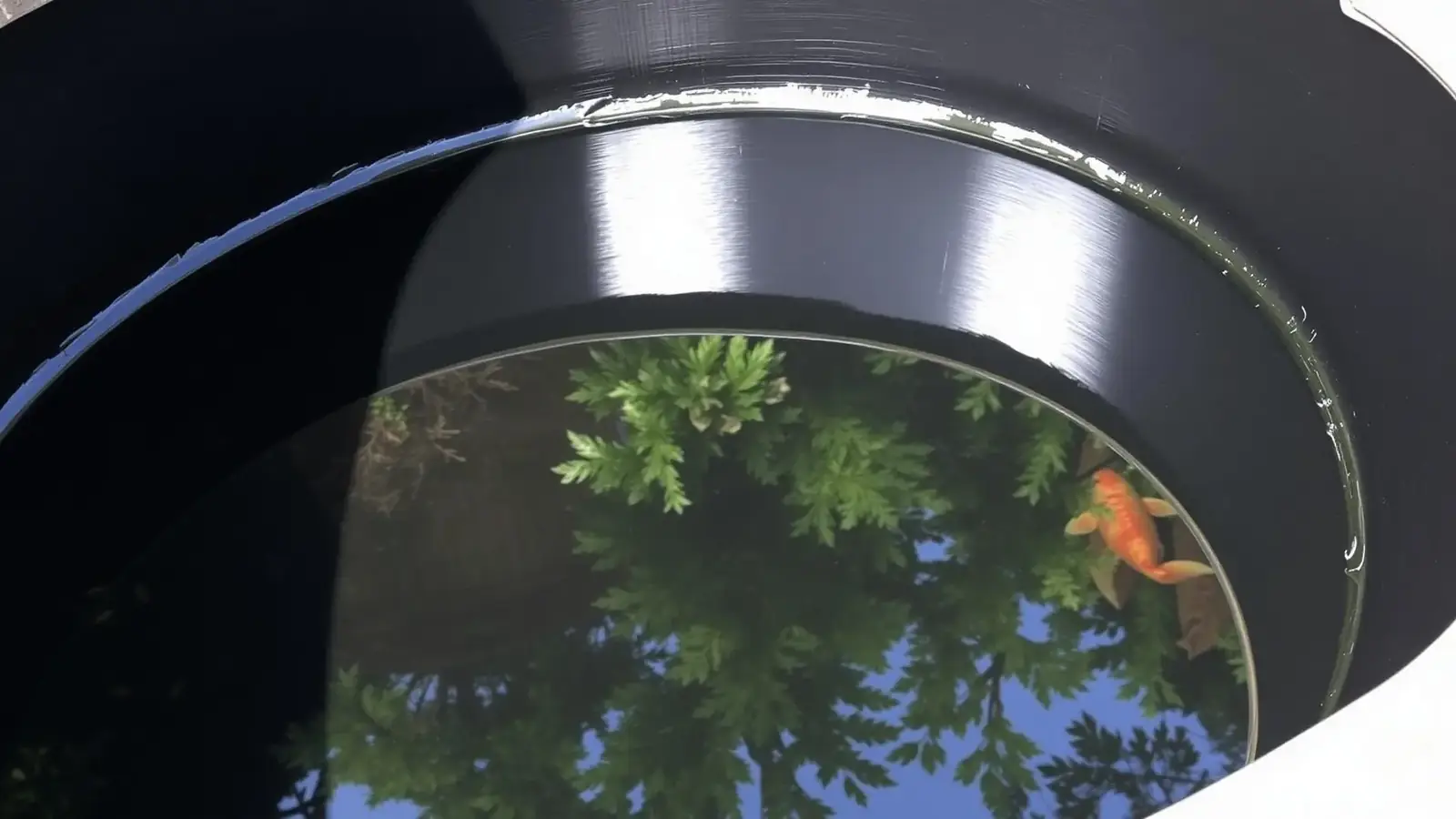
Preformed pond liners: an honest guide
Rigid, moulded shells compared to flexible pond liners — where preformed makes sense, and where it doesn't.
What a preformed pond liner actually is
A preformed pond liner is a rigid, vacuum-moulded shell in a fixed shape and size — most commonly high-density polyethylene (HDPE) or, at the premium end, hand-laid fibreglass (GRP). The plastic pond liner versions you see on garden-centre shelves are the HDPE format: light, cheap and finished in black or dark green to read as deep water once installed.
Whether it's marketed as a rigid pond liner, a precast pond liner, a plastic pond liner or a preformed pond liner, the underlying idea is the same — a factory-made basin that drops into a hole dug to match it, versus a flexible sheet that drapes into whatever shape you excavate.
Where a preformed shell earns its place
- Quick installs — dig the hole, drop the shell, backfill. A small feature can be built in an afternoon.
- Holds its shape — moulded shelves stay put, so there's no draping, folding or seam work.
- Small formal ponds — courtyards, patios and raised planters under about 500 litres.
- Rental or temporary features — easy to lift and reuse elsewhere.
Where a rigid pond liner falls short
- Limited sizes — most preformed shells top out under 500 litres; anything over ~1,500 litres becomes rare and expensive.
- Shallow shelves — moulded marginal shelves are usually only a few centimetres deep, which limits planting and fish stocking.
- Awkward to level — the shell has to sit dead level on backfilled sand or the water line will look wrong within days of filling.
- Brittle in frost — thin HDPE shells can crack in a hard UK winter, especially where they've been stressed against unyielding backfill.
- No custom shapes — you get whatever the factory moulded. A flexible liner lets you dig a kidney, an L or a wildlife pond with a beach.
Preformed vs flexible pond liner at a glance
| Factor | Preformed shell | Flexible liner |
|---|---|---|
| Size flexibility | Fixed shapes, typically < 500 L | Any size or shape you can dig |
| Price per litre | Cheap under 300 L, expensive above | Roughly linear — scales predictably |
| Lifespan (UK) | 10–15 years before UV brittling | 25–45 years on reinforced polymer |
| Install difficulty | Fast, but hole must match exactly | Slower, forgives excavation error |
| Fish suitability | Fine for small goldfish only | Koi-safe on EPDM, butyl or RPM |
When to choose preformed
Choose a preformed pond liner when the pond is small (under about 500 litres), formal in shape, and you want it installed on a weekend without underlay, measuring maths or seam work. A precast pond liner in a courtyard or on a patio is a genuinely sensible spec — the fixed shape becomes a feature, not a compromise, and the shell's limitations don't matter at that scale.
When to choose a flexible liner
Choose a flexible liner for anything over ~1,500 litres, for wildlife ponds, koi ponds, natural-looking edges, or anywhere shape needs to follow the site rather than the factory. A reinforced polymer liner like our RPM 0.7 mm reinforced pond liner outlasts a preformed shell by 15+ years and costs less per litre at every size above a large planter. For a broader comparison see our companion guide on pond liner vs preformed pond.
Plan your build
If a flexible liner is the right call, size it in seconds with the pond liner calculator, or get a made-to-measure sheet welded to your exact dimensions.
Ready for a reinforced pond liner that lasts?
RPM is the reinforced pond liner material trusted by installers across the country — 0.7 mm polymer membrane, koi-safe, 45-year lifespan.