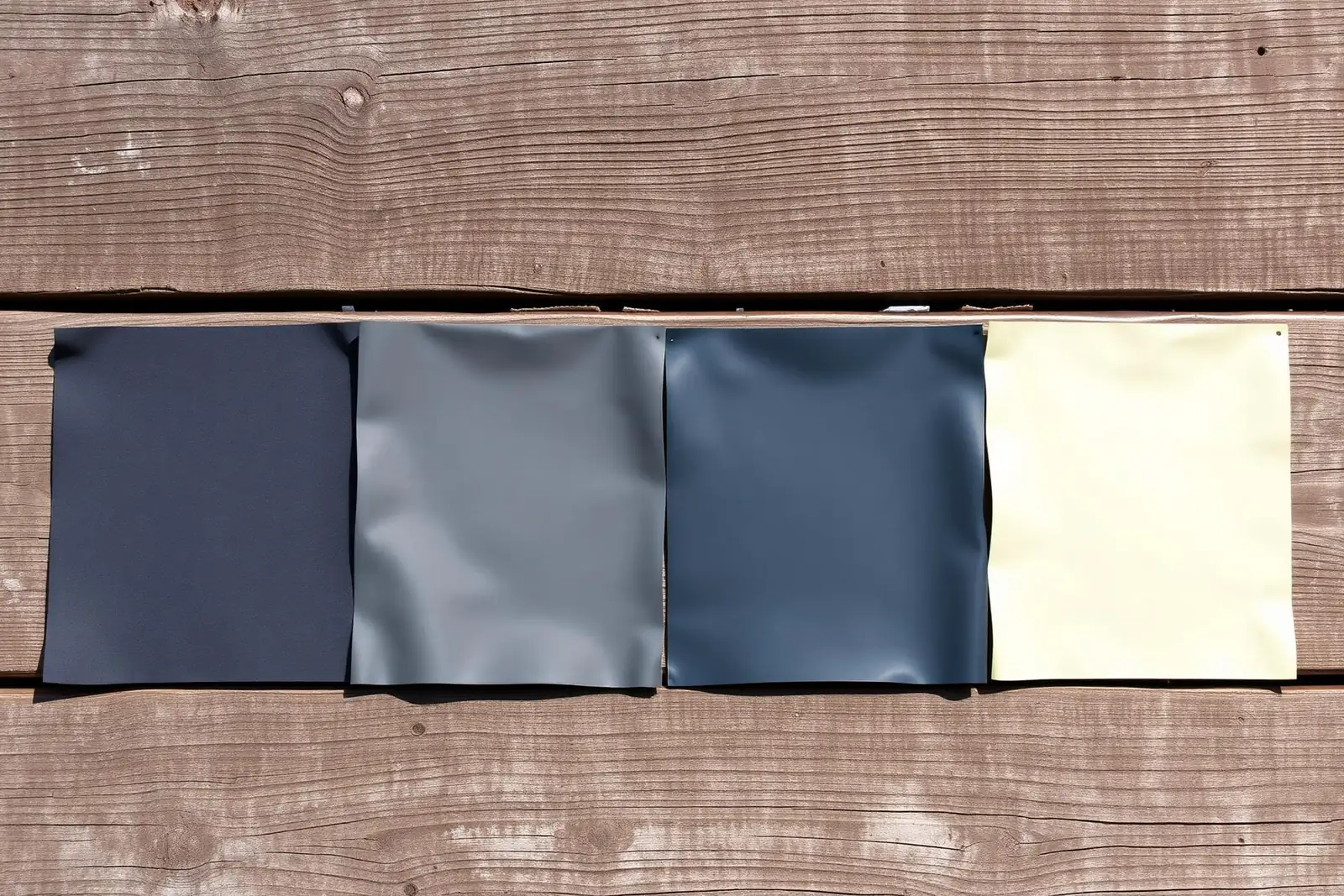
Pond liner comparison
Reinforced polymer (RPM) vs EPDM rubber, PVC and Butyl — independent UK guidance on lifespan, weight, fish safety and price.
Why RPM beats the rest.
The honest side-by-side. RPM 0.7 mm matches EPDM on lifespan, beats PVC on safety, and weighs half as much as butyl.
| Property | Most popularOur linerRPM 0.7 mm | PVC | EPDM | Butyl |
|---|---|---|---|---|
| Lifespan | 45 years | 10–15 years | 20+ years | 15–20 years |
| Thickness | 0.7 mm reinforced | 0.5–1.0 mm | 1.0–1.5 mm | 0.75 mm |
| Weight (per m²) | 0.61 kg | 0.7 kg | 1.2 kg | 0.95 kg |
| UV stable | ||||
| Fish & wildlife safe | ||||
| Plasticiser-free | ||||
| Recyclable | ||||
| On-site weldable | ||||
| Cold flexibility | −30 °C | −5 °C | −40 °C | −20 °C |
How to choose between RPM, EPDM, PVC and Butyl
The right pond liner depends less on brand and more on four practical trade-offs: upfront budget, expected lifespan, fish safety, and whether you can weld on site or are fitting a single drop-in sheet. The notes below summarise where each material genuinely shines so the matchup cards make sense in context.
Reinforced polymer (RPM)
Best all-rounder for serious builds. The internal scrim delivers high tear strength at just 0.7 mm, keeps weight low for two-person handling, and heat-welds into seamless panels of any size. Fish-safe out of the box and backed by a 45-year lifespan — the default choice for koi, formal ponds and lined reservoirs.
EPDM rubber
Excellent UV stability and a soft hand for irregular wildlife pools. Heavier per square metre and joined with tape rather than welds, so seams are a weak point on larger jobs. A sensible DIY pick under about 30 m² where a single sheet covers the whole pond. Full write-up on the EPDM material guide.
PVC
Cheapest upfront and easy to handle, but plasticiser migration shortens lifespan and not every grade is certified fish-safe. Suits temporary or ornamental pools where a 10–15 year service life is acceptable. More detail on the PVC material guide.
Butyl
The traditional premium rubber — supple and forgiving, but heavy, expensive and increasingly hard to source in large sheets. Still a valid choice for small heritage ponds where matching an original 1980s install matters. See the butyl material guide for the full breakdown, or the pond liner materials hub for HDPE, RPE and fibreglass.
How we compare
Figures on this page are drawn from manufacturer datasheets, independent BBA and DIN EN 13361 test results, and feedback from the UK installers in our directory who fit several thousand square metres a year. We weight long-term field performance — seam integrity, UV ageing, fish safety — over showroom specs. Prices are reviewed quarterly against current UK trade-supply rates.
Pick a focused comparison
Two-material deep dives, each with a clear verdict.
RPM vs EPDM pond liner
EPDM rubber has been the default pond liner for decades. Reinforced polymer (RPM) is the modern alternative — half the weight, factory-fused seams, and a comparable 45-year lifespan.
Read comparisonRPM vs PVC pond liner
PVC is the cheap option on the shelf — and the only material here that isn't certified fish-safe. RPM costs a little more upfront and lasts more than twice as long.
Read comparisonRPM vs Butyl pond liner
Butyl rubber is the traditional premium pond liner — heavy, hand-cut, and glued at the seams. RPM is the engineered modern equivalent at a fraction of the weight.
Read comparisonReady for a reinforced pond liner that lasts?
RPM is the reinforced pond liner material trusted by installers across the country — 0.7 mm polymer membrane, koi-safe, 45-year lifespan.