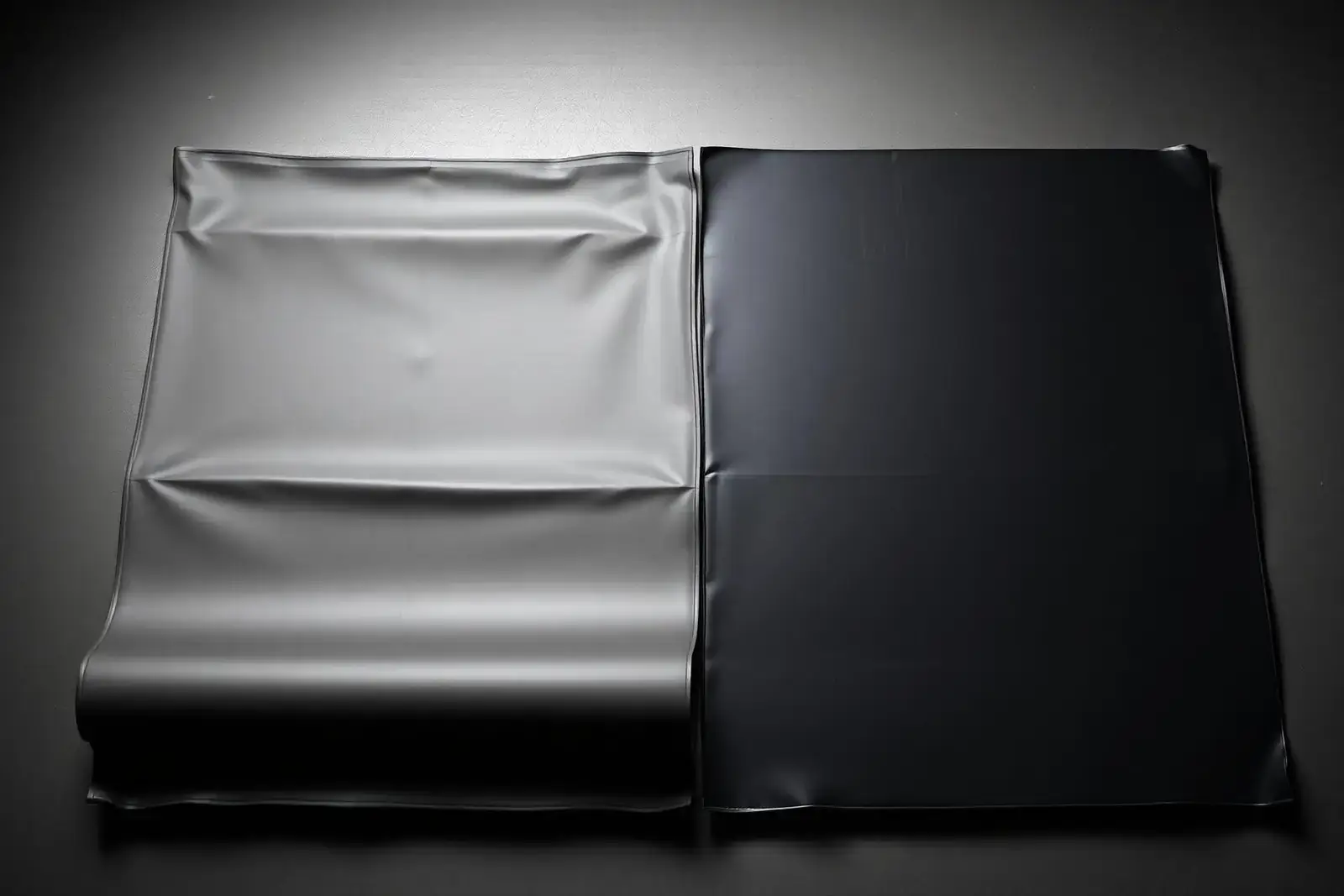
RPM vs Butyl pond liner
Butyl rubber is the traditional premium pond liner — heavy, hand-cut, and glued at the seams. RPM is the engineered modern equivalent at a fraction of the weight.
| Property | Our pickReinforced polymerRPM 0.7 mm | AlternativeButyl |
|---|---|---|
| Lifespan | 45 years | 15–20 years |
| Thickness | 0.7 mm reinforced | 0.75 mm |
| Weight (per m²) | 0.61 kg | 0.95 kg |
| UV stable | ||
| Fish & wildlife safe | ||
| Plasticiser-free | ||
| Recyclable | ||
| On-site weldable | ||
| Cold flexibility | −30 °C | −20 °C |
RPM vs Butyl: a balanced breakdown
Last updated 18 May 2026
Lifespan
Butyl is the grandfather of pond liners and the gold-standard for longevity — there are documented butyl ponds in the UK still holding water after 40 years. Field performance for butyl routinely exceeds 30 years. RPM has a 45-year expected lifespan backed by accelerated weathering data that projects a comparable service life. In practice, both materials will likely outlast the original pond design.
Weight & handling
Butyl is hefty at around 0.95 kg per square metre at 0.75 mm — heavy enough that large sheets need three or four pairs of hands to position. The material also has strong crease memory, so folds set in transit can be hard to smooth out. RPM at 0.61 kg per square metre is dramatically easier to handle, rolls out flat and drapes obediently into shelves and corners without fighting back.
Fish & wildlife safety
Both materials are fully fish- and wildlife-safe with no plasticiser content, and both are widely used in koi and natural swim ponds. Butyl has the longer track record here — decades of evidence that it doesn't affect water chemistry. RPM matches that performance on current testing. Neither will harm livestock or invertebrates once filled and dechlorinated in the normal way.
Installation
This is butyl's main weakness. It cannot be hot-air welded; every seam is a solvent-glued lap joint that has to be carefully prepped, weighted and inspected. On larger reservoirs that means many metres of glued seam and a corresponding inspection burden. RPM is hot-air welded on site, producing seams that test stronger than the membrane itself. For anything above a single-sheet job, RPM is meaningfully faster and lower-risk to install.
Price
Butyl is the most expensive material in this comparison — typically 30–50% more per square metre than RPM at current UK trade rates, with availability of large sheets increasingly limited. RPM offers comparable lifespan and superior installation economics at a noticeably lower price. Butyl remains worth specifying when matching an existing heritage install, but it rarely wins on cost alone.
The verdict
Butyl is still a fine material, but it can't be welded on-site — every seam is a glued joint that has to be inspected. RPM is lighter to carry, faster to install, and the seams are factory-fused or hot-air welded. Pick RPM unless you have a specific reason to specify butyl.
Want the full background on Butyl on its own terms? Read the Butyl material guide, or browse every flexible-membrane option on the pond liner materials hub.
Other comparisons
RPM vs EPDM pond liner
EPDM rubber has been the default pond liner for decades. Reinforced polymer (RPM) is the modern alternative — half the weight, factory-fused seams, and a comparable 45-year lifespan.
Read comparisonRPM vs PVC pond liner
PVC is the cheap option on the shelf — and the only material here that isn't certified fish-safe. RPM costs a little more upfront and lasts more than twice as long.
Read comparison