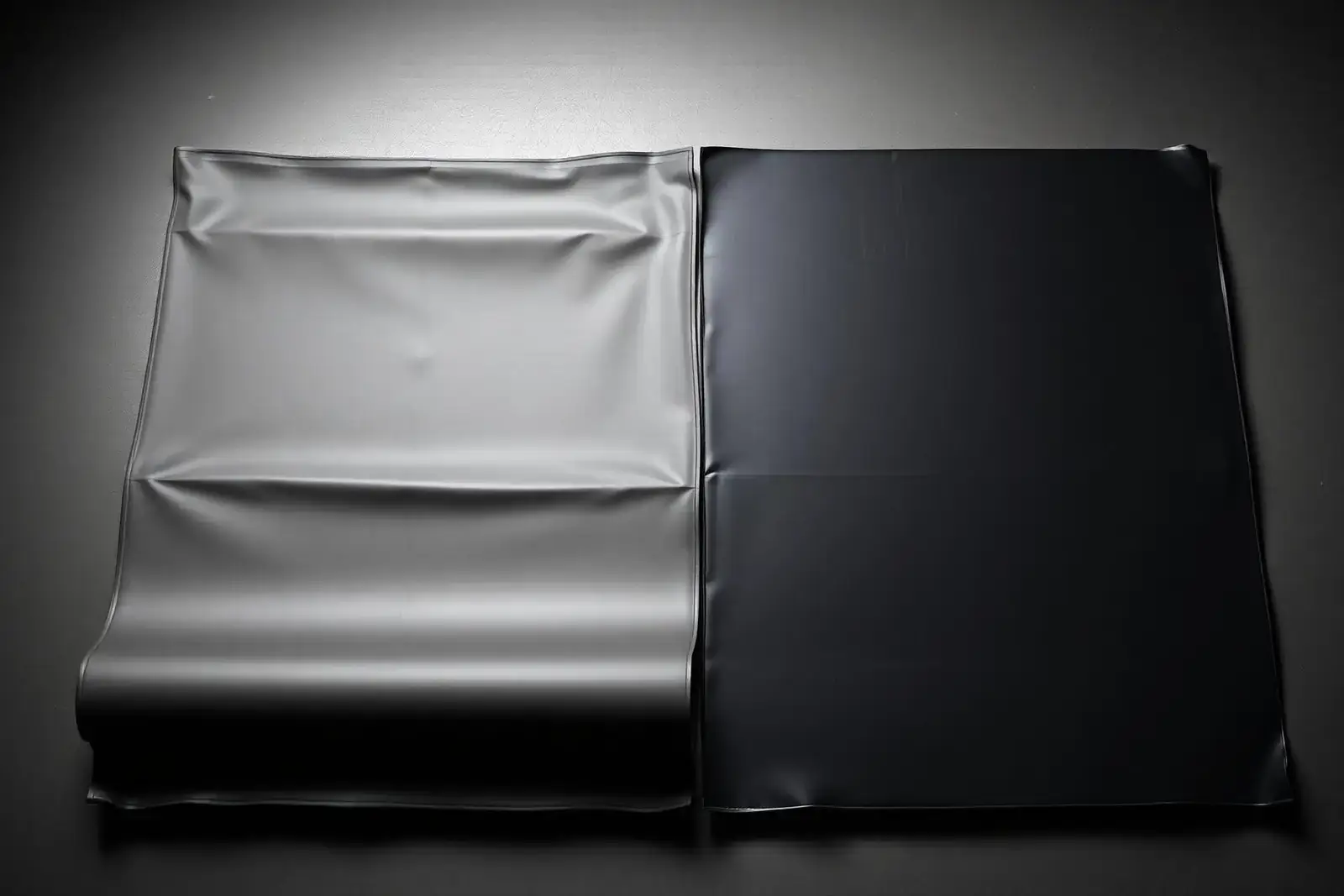
RPM vs EPDM pond liner
EPDM rubber has been the default pond liner for decades. Reinforced polymer (RPM) is the modern alternative — half the weight, factory-fused seams, and a comparable 45-year lifespan.
| Property | Our pickReinforced polymerRPM 0.7 mm | AlternativeEPDM |
|---|---|---|
| Lifespan | 45 years | 20+ years |
| Thickness | 0.7 mm reinforced | 1.0–1.5 mm |
| Weight (per m²) | 0.61 kg | 1.2 kg |
| UV stable | ||
| Fish & wildlife safe | ||
| Plasticiser-free | ||
| Recyclable | ||
| On-site weldable | ||
| Cold flexibility | −30 °C | −40 °C |
RPM vs EPDM: a balanced breakdown
Last updated 18 May 2026
Lifespan
Both materials are built to outlast the gardener who installs them. EPDM has a 30-year track record in UK ponds, with documented installations from the early 1990s still holding water. RPM is the newer arrival but carries a 45-year lifespan underwritten by accelerated UV testing equivalent to roughly 40 years of British sunlight. In practice, expect either to comfortably exceed two decades of service when fitted over a proper underlay.
Weight & handling
This is where the materials diverge most. EPDM at 1.0–1.5 mm weighs around 1.2 kg per square metre — a 10 × 6 m sheet is a serious two- or three-person lift. RPM at 0.7 mm comes in at roughly 0.61 kg per square metre, so the same sheet rolls out comfortably with two installers. EPDM's heft does help it sit naturally on shelves; RPM compensates with better drapeability into tight corners.
Fish & wildlife safety
Both are certified fish- and wildlife-safe and contain no plasticisers that can leach into pond water. EPDM should be rinsed and cured for a few weeks before stocking koi, as freshly unrolled sheets occasionally release trace mould-release oils. RPM ships clean and is generally safe to stock against once filled and dechlorinated. Neither material affects pH or supports algal blooms in normal use.
Installation
EPDM is supplied as a single factory-vulcanised sheet up to about 15 × 30 m; larger ponds need taped seams, which are the recognised weak point on big installations. RPM is hot-air welded on site, producing seams that test stronger than the parent material — there is effectively no size limit. For DIY fitters under 30 m², either is straightforward; above that, RPM's weldability tips the balance.
Price
Per square metre, EPDM and RPM sit within roughly 10–15% of each other at current UK trade rates, with EPDM marginally cheaper on small sheets and RPM pulling ahead on large panel-welded jobs once you account for fewer joins, lighter freight and quicker fitting. Lifetime cost — sheet plus underlay plus installation labour — usually favours RPM on anything over 25 m².
The verdict
EPDM still wins on extreme cold flexibility, but for the vast majority of UK ponds, RPM is the better all-rounder: lighter to handle, weldable on-site, and easier to fold around shelves. Choose EPDM for hillside reservoirs in genuinely arctic conditions; choose RPM for everything else.
Want the full background on EPDM on its own terms? Read the EPDM material guide, or browse every flexible-membrane option on the pond liner materials hub.
Other comparisons
RPM vs PVC pond liner
PVC is the cheap option on the shelf — and the only material here that isn't certified fish-safe. RPM costs a little more upfront and lasts more than twice as long.
Read comparisonRPM vs Butyl pond liner
Butyl rubber is the traditional premium pond liner — heavy, hand-cut, and glued at the seams. RPM is the engineered modern equivalent at a fraction of the weight.
Read comparison