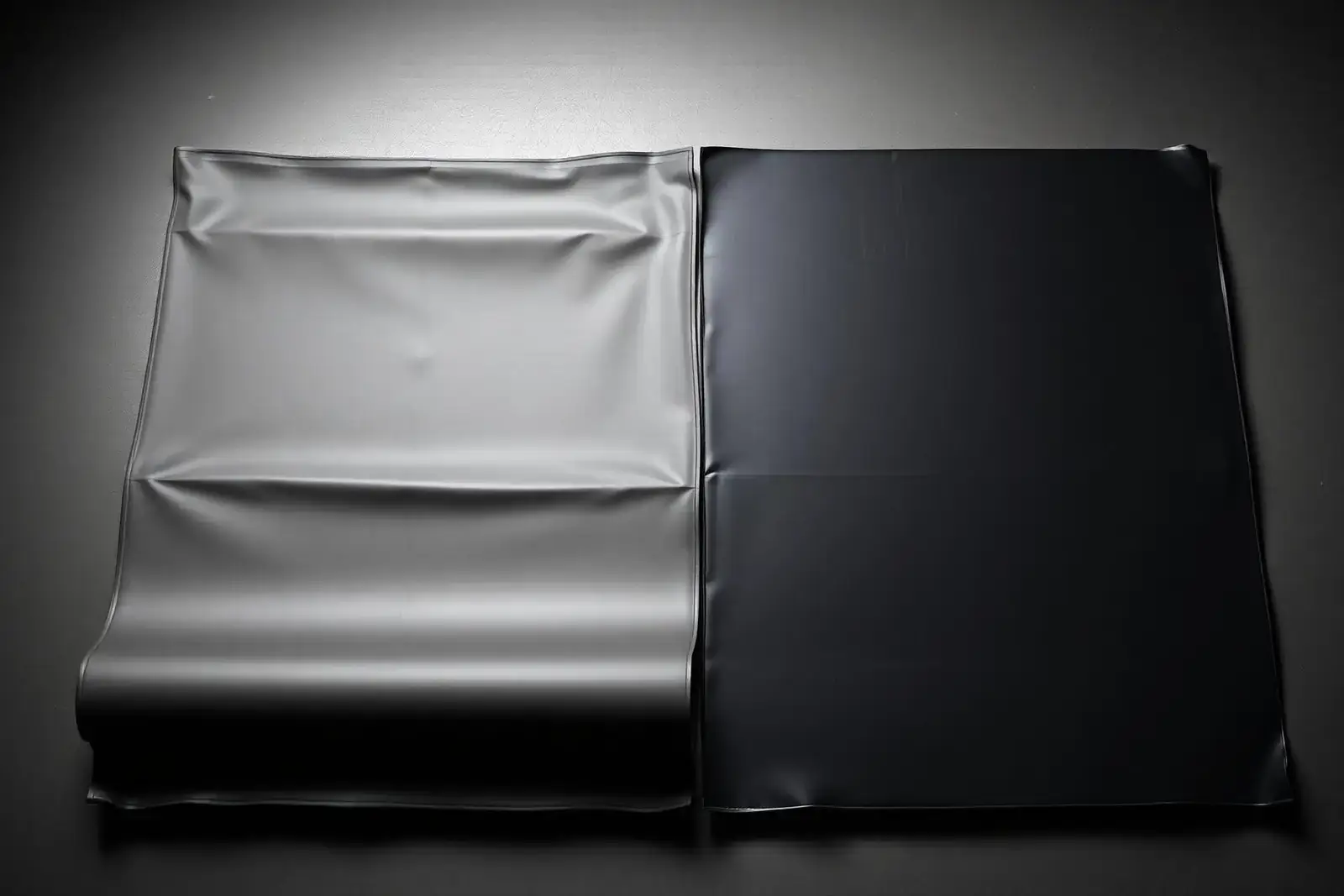
RPM vs PVC pond liner
PVC is the cheap option on the shelf — and the only material here that isn't certified fish-safe. RPM costs a little more upfront and lasts more than twice as long.
| Property | Our pickReinforced polymerRPM 0.7 mm | AlternativePVC |
|---|---|---|
| Lifespan | 45 years | 10–15 years |
| Thickness | 0.7 mm reinforced | 0.5–1.0 mm |
| Weight (per m²) | 0.61 kg | 0.7 kg |
| UV stable | ||
| Fish & wildlife safe | ||
| Plasticiser-free | ||
| Recyclable | ||
| On-site weldable | ||
| Cold flexibility | −30 °C | −5 °C |
RPM vs PVC: a balanced breakdown
Last updated 18 May 2026
Lifespan
PVC pond liners typically last 10–15 years before plasticiser migration leaves the sheet brittle and prone to splitting at folds. Cheaper grades fail closer to the 8-year mark, particularly above the waterline where UV exposure accelerates breakdown. RPM is engineered for 25+ years of service and the woven scrim resists the slow cracking that finishes off ageing PVC. For a permanent pond, the lifespan gap is the headline difference.
Weight & handling
PVC is light and easy to drag into place — a genuine DIY-friendly material at around 0.7 kg per square metre. RPM is very similar in weight at 0.61 kg per square metre, so neither feels heavy compared with EPDM or butyl. PVC's edge is that it folds tightly without crease memory; RPM's scrim prefers gentle drapeing, but the practical handling experience is broadly comparable for both.
Fish & wildlife safety
This is the critical distinction. Standard PVC pond liners contain phthalate plasticisers that can leach into water over time and are not certified fish-safe — fine for an ornamental water feature, not appropriate for koi or wildlife you want to thrive. RPM is fully plasticiser-free, BBA-approved for potable water in adjacent applications, and safe to stock against from day one. For any pond with livestock, this alone settles the question.
Installation
Both materials are weldable, which is unusual for budget liners. PVC takes solvent or hot-air welds well but the joins are weaker than the parent sheet, so larger jobs rely heavily on installer skill. RPM welds produce seams that exceed the strength of the membrane itself in pull tests. For a single drop-in sheet under 20 m², PVC is genuinely easy; above that, RPM's seam integrity matters.
Price
PVC is the cheapest pond liner on the UK market — typically 40–55% less per square metre than RPM at current trade rates. That price gap narrows once you factor in shorter lifespan: replacing PVC every 12 years against RPM's 25 means the total cost of ownership ends up broadly similar, before counting the labour of relining a mature pond.
The verdict
PVC has one job: budget liners for short-term garden features with no fish. For anything you want alive in five years' time — or that you'd rather not replace in 2035 — RPM is the obvious choice. Plasticiser-free, fish-safe, and 25+ year lifespan.
Want the full background on PVC on its own terms? Read the PVC material guide, or browse every flexible-membrane option on the pond liner materials hub.
Other comparisons
RPM vs EPDM pond liner
EPDM rubber has been the default pond liner for decades. Reinforced polymer (RPM) is the modern alternative — half the weight, factory-fused seams, and a comparable 45-year lifespan.
Read comparisonRPM vs Butyl pond liner
Butyl rubber is the traditional premium pond liner — heavy, hand-cut, and glued at the seams. RPM is the engineered modern equivalent at a fraction of the weight.
Read comparison